Interesting public transport systems around the world

By EHG
●Published on August 6, 2026
These are the systems that turn the commute itself into the reason to go, built decades or centuries before “transit” was a design category, kept running by cities that simply never stopped needing them, and still carrying real passengers to work every single day, not just tourists with cameras.
1. Mi Teleférico, La Paz & El Alto, Bolivia
Most cities solve traffic with more roads. La Paz solved it by going up. Mi Teleférico is the world’s largest urban cable car network, ten colour-coded lines and more than thirty stations strung across the canyon that separates La Paz from its sister city El Alto, perched 400 metres higher on the Andean altiplano.
Cabins depart every twelve seconds, moving around 3,000 people an hour and cutting a commute that used to take an hour down to about ten minutes, gliding silently over rooftops, markets and football pitches with the snow-capped peak of Illimani filling the window the entire way.
This isn’t a tourist gondola bolted onto a ski hill; it’s the actual metro system, used daily by hundreds of thousands of commuting La Pazños, and a fare costs a few Bolivianos rather than a few dollars.
Ride the full network end to end and you’ll get roughly three hours of the best, cheapest aerial tour in South America, no helicopter required!
2. The Schwebebahn, Wuppertal, Germany
Wuppertal’s suspension railway has been hanging upside down above the Wupper River since 1901, which makes it the oldest operating monorail on Earth, and it still looks like it arrived from the future. Carriages hang from an elevated steel rail roughly 12 metres above the water, gliding along a 13-kilometre route through the middle of the city.
Kaiser Wilhelm II rode it on opening day; so, famously, did a young circus elephant named Tuffi in 1950, who took an unscheduled detour out of the carriage and into the river below…. and survived.
No stunt required today: around 85,000 commuters use it every ordinary weekday, making it one of the rare transport curiosities that never stopped being genuinely useful. It’s an easy day trip from Düsseldorf or Cologne, and there’s no better way to see Wuppertal than gliding silently above its rooftops, exactly as passengers have for over 120 years.
3. The Star Ferry & the Peak Tram, Hong Kong
Hong Kong’s Star Ferry has been crossing Victoria Harbour since 1888, and the fare for one of the best views in Asia (the full skyline, Kowloon to Hong Kong Island, sampan-green boats slicing between container ships and junk boats) still costs less than a dollar. It’s survived typhoons, wars and over a century of competition from tunnels and bridges by simply remaining the fastest, cheapest and most scenic way to cross the harbour, exactly as it always was.
Pair it with the Peak Tram, running since the same year, which hauls its funicular cars up a gradient so steep that buildings outside the window appear to lean sideways as you climb. Add the city’s “ding ding” double-decker trams rattling along Hong Kong Island’s northern shore, and you’ve got three working transit systems, each over a century old, that locals still ride to get to work, not just to get a photo.
4. Jeepneys, Manila, Philippines
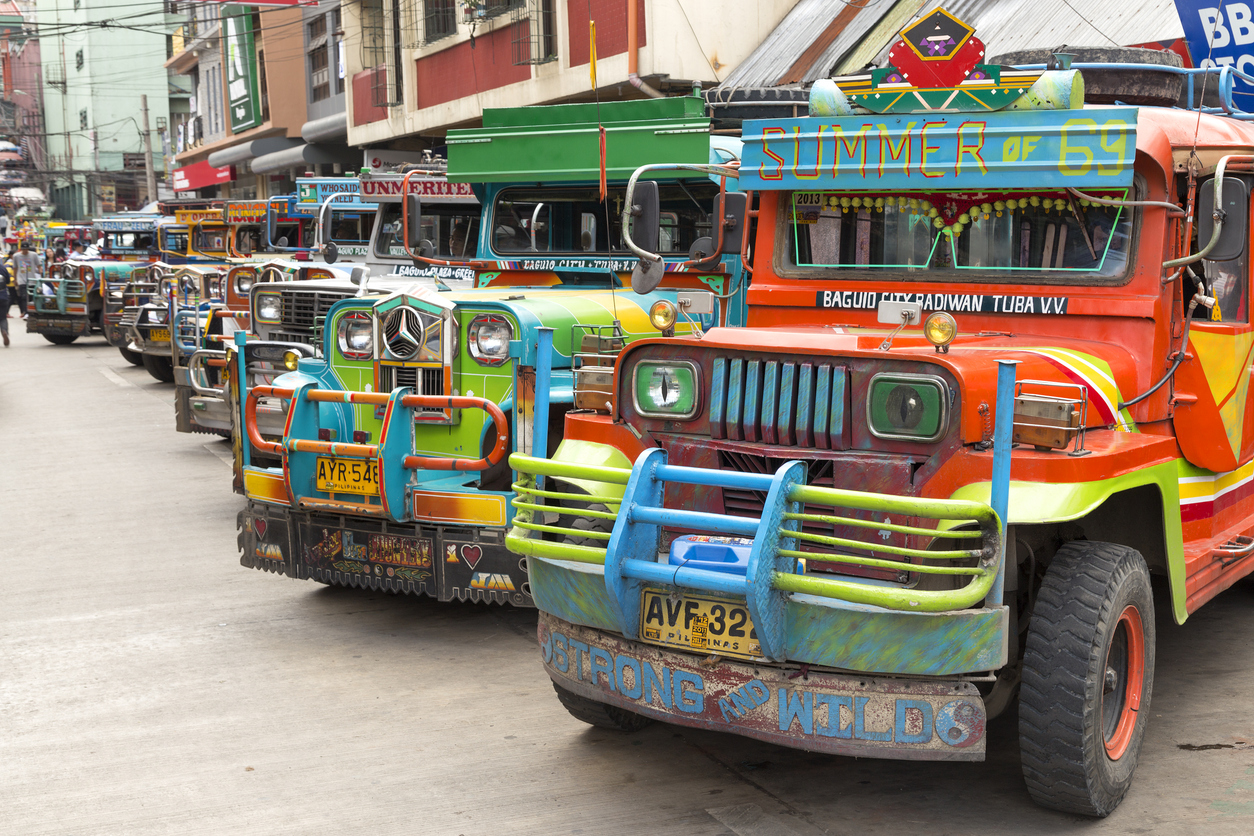
When the Philippines was left with thousands of surplus American military jeeps after the Second World War, Filipino mechanics didn’t scrap them: they stretched the wheelbases, welded on parallel benches, bolted metal roofs over the top, and painted the entire thing in whatever colours, chrome and hand-lettered slogans the owner felt like. The jeepney was born out of necessity and became something closer to folk art on wheels. Today an estimated nine million rides happen on them in Metro Manila alone, every single day.
There’s no app, no fixed stop and often no visible route number. You flag one down, shout your destination, and pass your fare hand to hand up to the driver through a cabin full of strangers. Modern electric jeepneys are gradually replacing the classic hand-painted fleet, which makes riding one now feel less like a novelty and more like catching a piece of living history before it quietly disappears.
5. The Vaporetto, Venice, Italy
Venice has no roads, so it built a bus system out of boats. The vaporetto (literally “little steamer,” after the steam launches that started the service in 1881) is still how the city actually moves. ACTV runs more than twenty lines and over 150 vessels through the canals and out across the lagoon to Murano, Burano and the Lido, carrying commuters, schoolchildren and grocery deliveries alongside everyone else.
Skip the gondola (charming, but built entirely for tourists and priced accordingly) and ride the Number 1 line down the full length of the Grand Canal instead. Same palazzos, same golden light on the water at sunset, for a fraction of the price, standing on deck next to Venetians doing their actual commute.
Before You Go: Save on the Trip With Your EHG Member Rewards
A trip built around getting there is still a trip: flights, accommodation and travel gear all add up, and EHG members don’t pay full price for any of it. Through the EHG member rewards library, members access exclusive discounts across 12,000+ retail partners, covering everything from flights and luggage to everyday groceries and fuel. With up to 80% off online shopping, 5% off Coles and Woolworths, and 40% off dining, the average EHG family saves around $5,500 a year, a meaningful head start on the next trip.
These Are Exactly the Trips Exclusive Holiday Getaways Was Built For
Most people will never ride any of these, not because they’re unreachable, but because it takes more than a search engine and a credit card to actually plan a trip around them.
We built Exclusive Holiday Getaways because we believed Australians deserved a membership that did three things at once: helped them win extraordinary holidays, saved them real money every day, and gave back to the causes that matter most to them.
Every week, EHG members go in the draw to win luxury holidays (the kind of trips on this list) with prizes worth up to $40,000, 20% of every membership fee goes directly to your chosen charity: from Vision Australia and Lifeline to Make-A-Wish and the Great Barrier Reef Foundation.
See all our charity partners here.
Join EHG: access thousands of everyday savings, support a charity you care about, and go in the weekly draw to win a luxury holiday. The best rides don’t wait either.
Published August 6, 2026


