Local spots to eat around the world

By EHG
●Published on July 30, 2026
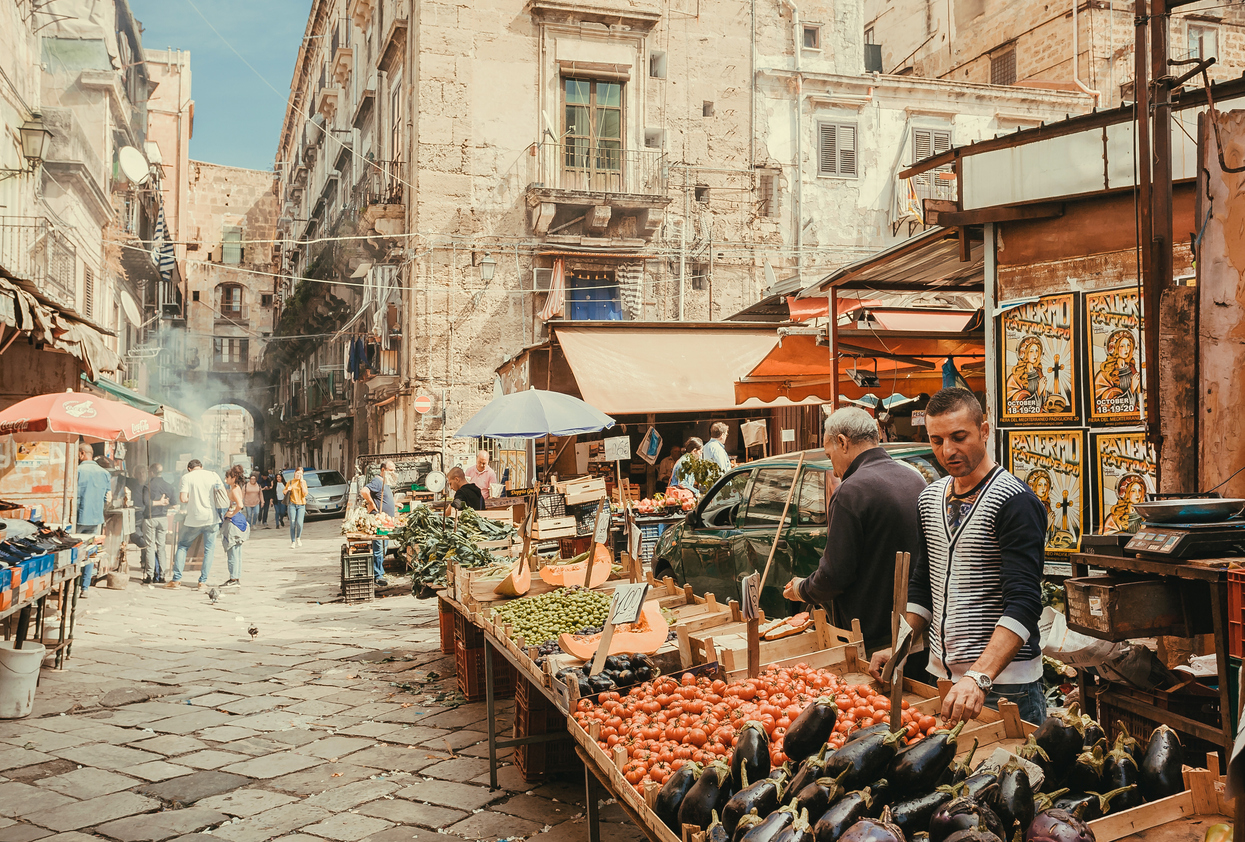
Best Restaurants around the world are common knowledge: white tablecloths, six month waitlists, tasting menus explained by a server in a headset, photographed from the same overhead angle by the same few million accounts.
They’re extraordinary. They’re also booked out, eye wateringly priced, and about as local as an airport lounge.
The truly great meals, the ones locals queue for before sunrise are still out there. You just have to know where to look.
These are seven of them. Places where the menu is a handwritten sign, where the best seat is a plastic stool, and where the only review that matters is the length of the queue.
And at the end of this list, we’ll show you how EHG members are already saving on the flights, the stays and the dining that get them there.
1. Footscray, Melbourne, Australia
Ask a Melburnian where they actually eat, not where they take interstate visitors, and Footscray usually comes up. This is a food strip built by generations of migration: Vietnamese pho and bánh mì along Hopkins Street, Ethiopian and Eritrean injera a block over, halal snack packs, West African jollof rice, and a produce market that still smells like the Mekong Delta on a Saturday morning. Nothing here is styled for a camera. It’s simply some of the best, most honest cooking in the country, sold at prices that haven’t caught up to the rest of Melbourne.
Footscray Market itself is the anchor: a cavernous, unglamorous hall of butchers, fishmongers and fruit stalls that’s been feeding the western suburbs since 1936. Come hungry, come early, and order whatever the queue is longest for. That’s usually the tell.
2. The Yatai Stalls of Fukuoka, Japan
Tokyo gets the Michelin stars. Osaka gets the street food fame. But Japanese food writers that choose to eat on a work night will say Fukuoka, a city on the southern island of Kyushu that most Australian visitors skip entirely.
The reason is the yatai: small, portable food carts that set up along the Naka River and the city’s main streets every evening, each one seating no more than eight or ten people shoulder to shoulder.
Order tonkotsu ramen with its cloudy pork bone broth, or work your way through skewers of yakitori and gyoza while the stall owner cooks two feet in front of you. There are around a hundred yatai operating across the city on any given night, and almost none of them have an English menu. Point, nod, and trust the process.
3. El Vilsito, Mexico City, Mexico
By day, El Vilsito is a working mechanic’s garage in the Narvarte neighbourhood, hydraulic lift and all. By night, the same space becomes one of Mexico City’s most celebrated taco stands, with a trompo of marinated pork spinning by the door and a queue of taxi drivers, night shift workers and in the know locals stretching down the block. There’s no sign out front worth mentioning. You find it by asking, or by following the smell of achiote and roasting pork.
Order tacos al pastor, thin slices carved straight off the spit onto warm corn tortillas, topped with pineapple, onion, coriander and a squeeze of lime from the salsa bar. It’s the kind of meal that costs almost nothing and outclasses restaurants charging fifty times more. Go after 9pm, when the garage properly comes alive.
4. Or Tor Kor Market, Bangkok, Thailand
Every guidebook sends visitors to Chatuchak, and Chatuchak is genuinely worth seeing. But the market Bangkok’s own chefs shop at is Or Tor Kor, directly across the road from Chatuchak’s northern gate and about a tenth as crowded. This is where the city’s best restaurants source their produce: mangoes so ripe they’re sold with a spoon, curries simmered in enormous pots since dawn, and a fruit selection that makes a supermarket look apologetic.
Skip the sit down restaurants entirely and graze instead: khao soi from one stall, mango sticky rice from another, a bag of still warm roti to finish. The market is covered, air conditioned in parts, and organised enough that you can eat an extraordinary meal for a few dollars without ever raising your voice over a tuk-tuk horn.
5. Ballarò Market, Palermo, Sicily
Naples gets the pizza headlines, but Palermo’s Ballarò market has been feeding the working poor of Sicily since Arab traders founded it over a thousand years ago, and the street food culture it produced has barely changed since. Vendors still call out prices in the traditional abbanniata chant, a musical street cry unique to Sicilian markets, while stalls fry panelle (chickpea fritters), sfincione (a thick, oniony Sicilian pizza) and, for the genuinely adventurous, pane ca meusa, a spleen sandwich that’s been a Palermo institution for generations.
This is not a market built for tourists, and that’s exactly the point. Wander the narrow lanes behind Piazza Ballarò in the late morning, when the stalls are in full voice and the smoke from the frying carts drifts down the alley, and you’re tasting Sicily the way Palermo actually eats it.
6. Mzoli’s, Gugulethu, Cape Town, South Africa
Mzoli’s started as a butchery in the township of Gugulethu, on Cape Town’s Cape Flats, and it’s still technically a butchery: you choose your meat from the counter, pay by weight, and hand it to the grill cooks out back. What comes back a short while later, chargrilled boerewors, lamb chops and chicken, eaten with your hands off a communal tray, has turned Mzoli’s into one of the city’s most famous weekend gatherings, DJ set and all.
Saturdays are the moment to go, when half of Gugulethu turns up for what’s essentially a weekly street party built around a braai. It’s well outside the usual Cape Town tourist circuit of the Waterfront and Table Mountain, and it’s worth going with a local guide or tour who knows the area. The meal, and the atmosphere around it, are unlike anything else in the city.
7. Chorrillos, Lima, Peru
Lima’s fine dining scene gets the global headlines, Central and Maido regularly top the world’s best restaurant lists, but the fishing village of Chorrillos, a short drive south of the city centre, is where a different kind of Peruvian food story plays out. Boats come in each morning at the small harbour, and the cevicherías lining the waterfront serve whatever came off them a few hours earlier.
Order a classic ceviche, raw fish cured in lime and chilli, or tiradito, its sashimi-style cousin, and eat it looking out over the same fishing boats that caught it. It’s a working harbour, not a postcard, and the plastic chairs and paper napkins are part of the charm. This is the Lima that existed long before the world discovered Peruvian cuisine, and it’s still the best place in the city to understand why the food became famous in the first place.
Before You Go: Save on the Trip With Your EHG Member Rewards
A food trip like this means flights, accommodation and a fair amount of eating out along the way, and EHG members don’t pay full price for any of it. Through the EHG member rewards library, members access exclusive discounts across 12,000+ retail partners, including 40% off dining, 5% off Coles and Woolworths, and up to 80% off online shopping. The average EHG family saves around $5,500 a year, a meaningful head start on the next trip and the meals that come with it.
These Are Exactly the Trips Exclusive Holiday Getaways Was Built For
Most people will never eat at any of these places, not because they’re unreachable, but because finding them takes more than a search engine and a reservation. We built Exclusive Holiday Getaways because we believed Australians deserved a membership that did three things at once: helped them win extraordinary holidays, saved them real money every day, and gave back to the causes that matter most to them.
Every week, EHG members go in the draw to win luxury holidays, the kind of trips on this list, with prizes worth up to $45,000 and 20% of every membership fee goes directly to your chosen charity, from Vision Australia to WWF.
See all our charity partners here.
Join EHG, access thousands of everyday savings, support a charity you care about, and go in the weekly draw to win a luxury holiday. The best meals don’t wait either.
Published July 30, 2026


