New Year's Fireworks! Here's Where the World Counts Down Differently

By EHG
●Published on November 2, 2026
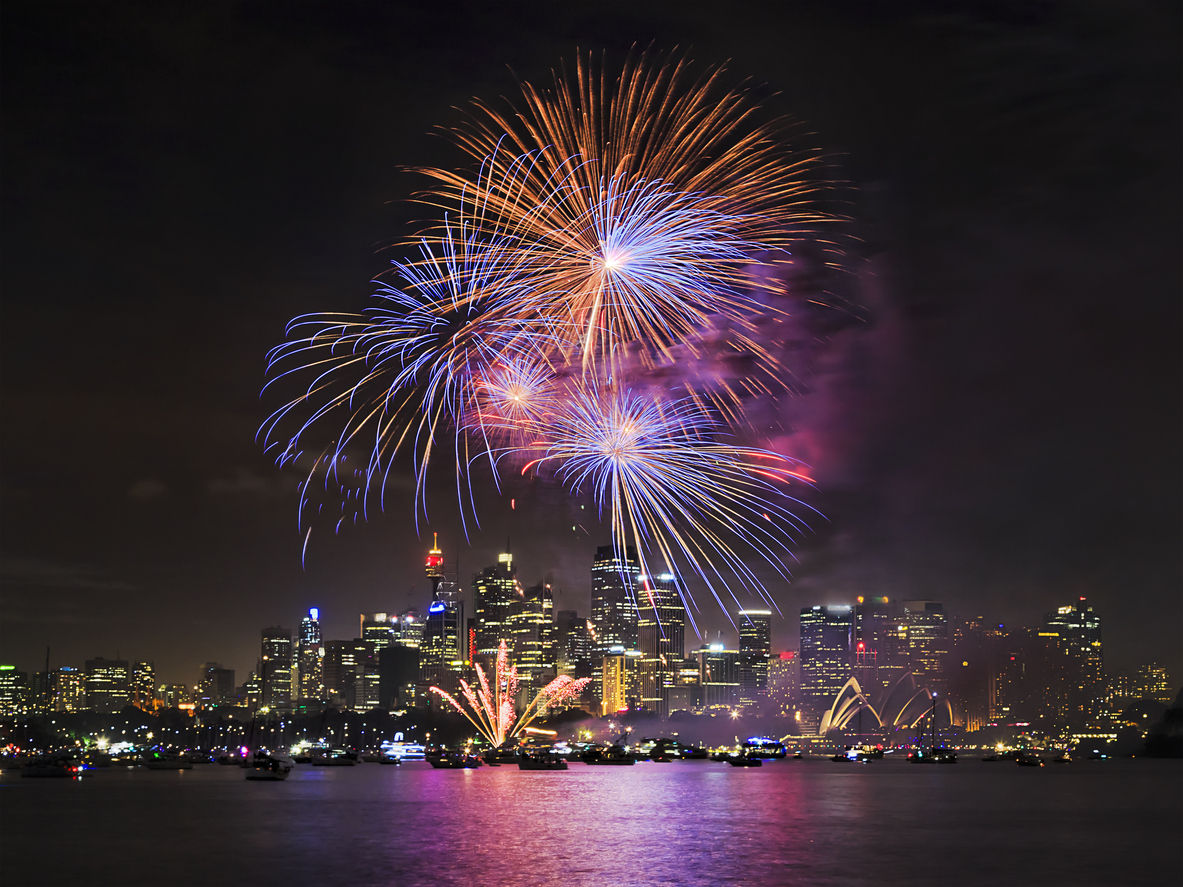
Every year Sydney Harbour lights up, Times Square drops the ball, London sets the Thames on fire.
It's spectacular. It's also the same spectacular we've seen every year since we were kids.
Meanwhile, the rest of the world is doing something far stranger. Monks are swinging a 70-tonne bell. Two million people are jumping waves in white. An entire nation is going quiet to watch a comedy show before letting off its own fireworks in the street.
These are six places where New Year's Eve still feels like a ritual and we'll show you how EHG members are winning these types of experiences.
1. Hogmanay: Edinburgh, Scotland
The Scots don't do one night. They do four. Hogmanay runs from 29 December to 1 January, and it opens with around 15,000 people carrying flaming torches through the Old Town. It's a river of fire down the Royal Mile, with pipe bands in the smoke. The procession borrows from Shetland's Up Helly Aa Viking festival, and it feels about as ancient as anything you'll see at New Year.
On the 31st, fireworks go off from the Castle at midnight while the street party sings Auld Lang Syne, the Robert Burns poem the whole world borrowed. Then comes first-footing. Tradition says the first guest through your door should be a tall, dark-haired man carrying coal, shortbread, salt and whisky. On New Year's Day, the bravest go down to South Queensferry for the Loony Dook, a fancy-dress plunge into the Firth of Forth. The water is around 7°C. The event turned 40 this year.
Good to know: Watching the torchlight procession is free. Carrying a torch costs around £15, and street party tickets start from about £39. Both sell fast, so book in autumn.
2. Réveillon: Copacabana, Rio de Janeiro
If you'd rather welcome the year in summer, Rio is the one. Around two million people pack four kilometres of Copacabana Beach. Guinness World Records calls it the biggest New Year's Eve party on Earth, and everything on the sand, from concerts to fireworks, is free.
Nearly everyone wears white. The custom comes from followers of Umbanda, an Afro-Brazilian religion, who began gathering here in the 1950s to make offerings to Iemanjá, goddess of the sea. After the fireworks, the crowd wades into the surf to jump seven waves, making a wish with each one, and throws white flowers into the water. Locals say that if you turn your back on the sea on your way out, your wishes won't come true.
Good to know: Wear your swimmers under your whites. Phone networks often drop out at midnight, so pick a numbered lifeguard post as your group's meeting point.
3. Joya no Kane: Chion-in Temple, Kyoto
This one is the opposite of a party. At Chion-in, Japan's largest temple bell, cast in 1633 and weighing around 70 tonnes, is struck 108 times on New Year's Eve. It takes 17 monks to do it. One lies back on the main rope while the others haul, shouting "ee-i, hitotsu" ("one more") with every swing.
In Buddhist teaching, each strike clears one of 108 earthly desires, so you go into the new year lighter. The ringing starts around 10.40pm and finishes about twenty minutes after midnight. Then the city drifts over to Fushimi Inari for hatsumōde, the year's first shrine visit, under its thousands of orange gates.
Good to know: At Chion-in you watch rather than ring, and the gates open around 8.30pm. Go early, rug up, and don't expect a countdown. That's the point.
4. Las Doce Uvas: Puerta del Sol, Madrid
In Spain, midnight is an eating challenge. As the clock on Puerta del Sol strikes twelve, you eat one grape per chime: twelve grapes, twelve months of luck. Fall behind and, by tradition, you're in for a rough month or two.
The ritual took off in 1909, when growers around Alicante had a bumper harvest to shift. One story says it started even earlier, in the 1880s, when working-class madrileños gathered in the square to mock the upper classes' habit of grapes and champagne. Either way, the whole country now watches this one clock on TV, and for twelve seconds the busiest square in Madrid goes almost silent.
Good to know: Buy seedless grapes, or peel them first. Locals do. If you'd rather skip the crush, there's a "rehearsal" in the square at midnight on 30 December.
5. New Year's Eve: Reykjavík, Iceland
Reykjavík has no official fireworks display. Instead, everyone else sets off their own, all at once, all over the city. The fireworks are sold by Iceland's volunteer search and rescue teams, and it's their biggest fundraiser of the year. In 2017, the sales covered about 60% of their annual budget. It might be the only fireworks show in the world that helps pay for mountain rescues.
Before that, the city lights bonfires in its neighbourhoods at around 8.30pm, a way of burning off the year that was. Then, from about 10.30pm, the streets go strangely quiet. Around 90% of the country is at home watching Áramótaskaup, a satirical comedy show that has roasted the year's events since 1966. Midnight arrives, everyone pours back outside, and the sky erupts. On a clear night, the northern lights sometimes join in.
Good to know: Bonfires are cancelled if the wind picks up. Check the city's list on the day, and pack ear protection for the kids.
6. First Light: Gisborne, New Zealand
You don't have to fly halfway round the world for this one. Gisborne, on the east coast of New Zealand's North Island, is the first city in the world to see each new day. Its Māori name, Te Tairāwhiti, means the Coast of the Sunrise.
The real prize is Maunga Hikurangi, sacred to Ngāti Porou and the highest non-volcanic peak in the North Island at 1,839 metres. It's traditionally regarded as the first land on Earth to catch the new sun. Guided sunrise experiences take you up to greet the dawn alongside nine giant carved whakairo. If you'd rather stay closer to town, Wainui and Midway beaches fill with people watching the first light of the year come up over the Pacific.
Good to know: The first sunrise of 2026 came up at about 6.35am. Every bed in town books out over New Year, so lock in your accommodation early.
Getting There Without Blowing the January Budget
New Year trips have a habit of costing more than the night itself. Peak-season flights, a hotel that triples its rate for one evening, and then January arrives with the bills. That's where the everyday side of EHG does the quiet work. Members save on the groceries, fuel and dining they're paying for anyway, and the average EHG family saves around $5,500 a year. That's a meaningful head start on a trip like one of these.
These Are Exactly the Trips Exclusive Holiday Getaways Was Built For
We built Exclusive Holiday Getaways because we believed Australians deserved a membership that did three things at once: saved them real money every day, gave back to the causes that matter to them, and gave them a shot at a trip they'd remember. Twenty per cent of every membership fee goes directly to the charity you choose, from Vision Australia and Starlight to WWF and the Ronald McDonald Charity. Members also go in the weekly draw for luxury holidays worth up to $40,000.
See all our charity partners here.
Join EHG to save on the everyday, back a cause you care about, and start the new year with something to look forward to.
Published November 2, 2026


