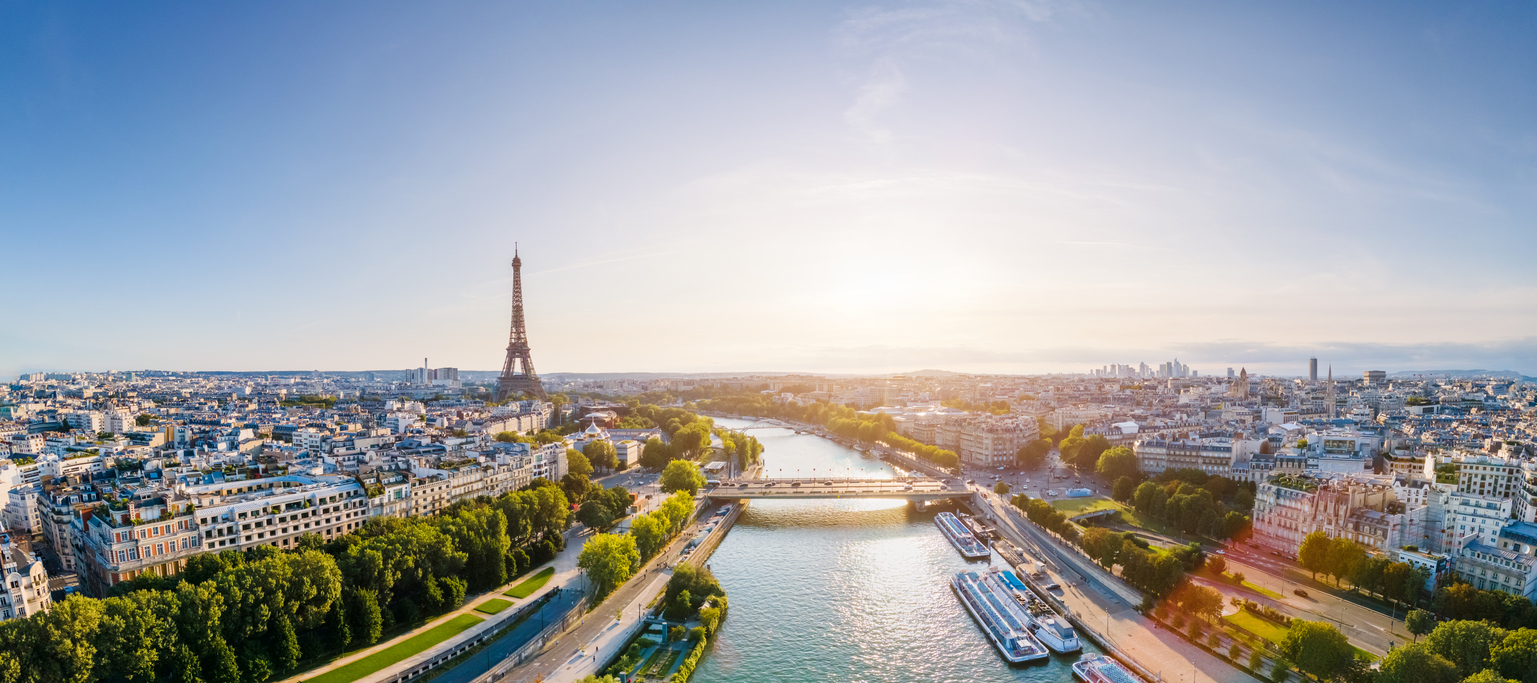
Discover
France
The world's most visited country and for good reason. France offers an unmatched combination of culture, cuisine, landscapes and joie de vivre that rewards every traveller
France is, by almost every measure, the world's favourite travel destination and it has held that title for decades.
It is a country of extraordinary variety: the electric sophistication of Paris, the sun-drenched lavender fields of Provence, the world-famous vineyards of Bordeaux and Burgundy, the glamour of the French Riviera, the medieval fortress city of Carcassonne, the powder slopes of Chamonix and Val d'Isere, and the rugged Atlantic coast of Brittany. No single trip can cover it all, and that is precisely the point.
France is also the country that gave the world modern gastronomy. The notion that food is something to be taken seriously, that a meal is an occasion rather than a refuelling stop, that ingredients matter and technique matters, these ideas were born here, and they remain embedded in daily French life in a way that's deeply appealing to anyone who loves to eat well. From a three-Michelin-star dinner in Lyon to a baguette and wedge of Camembert eaten by a canal in the Dordogne, France feeds you beautifully at every level.
It's also a country of cultural depth that's almost impossible to overstate. The Louvre alone contains more masterpieces than most countries' entire national collections. The châteaux of the Loire Valley represent the pinnacle of Renaissance architecture. The prehistoric cave paintings of the Dordogne are among the oldest art on earth. And French cinema, literature, fashion and design continue to shape global culture in ways both visible and invisible.
For EHG members, France is a destination that rewards return visits as much as first-timers. There is always another region to discover, another market to browse, another restaurant to make a reservation at. It's the kind of country you can visit ten times and still feel like you've barely scratched the surface.
How to get to France from Australia
Flights
Paris Charles de Gaulle (CDG) is the primary international gateway, with frequent connections from Sydney, Melbourne and Brisbane via Singapore, Dubai, Doha, Hong Kong or Kuala Lumpur.
Total travel time from Australia's east coast is approximately 22–26 hours including connection. Direct flights from Perth via Dubai with Emirates offer one of the smoother routings for Western Australian travellers.
Nice Cote d'Azur Airport (NCE) is a useful alternative entry point for travellers heading to the French Riviera, Provence or the Alps, well-served from Paris and major European hubs.
Getting Around France
TGV High-Speed Rail: France's TGV network is one of the great rail systems of the world. Paris to Lyon: 2 hours. Paris to Marseille: 3h20m. Paris to Bordeaux: 2h4m. Paris to Nice: 5h30m (or fly). The Europass and individual point-to-point tickets booked in advance can offer excellent value. Book via SNCF (the French national rail operator).
Regional TER Trains: For slower regional travel between smaller towns and villages, the TER regional rail network is comprehensive and affordable.
Rental Car: Essential for exploring Provence, the Dordogne, Burgundy wine country, the Loire Valley and Brittany at your own pace. Roads are excellent, signage is clear and driving in rural France is a genuine pleasure.
Domestic Flights: For Nice, Marseille, Lyon, Toulouse and Bordeaux, domestic flights from Paris are quick and often affordable if booked in advance, particularly on Air France and low-cost carriers.
Paris Metro and Velib': Within Paris, the Metro covers the entire city efficiently. Velib' bike hire and walking are both excellent options for shorter distances between neighbourhoods.
Best time to visit
Spring: April to June
France at its most beautiful. Wildflowers blanket the countryside, the Provence lavender season begins in late June, Paris is alive with energy, and the tourist crowds haven't yet reached their summer peak. May and June are particularly lovely, warm, long days and the country in full bloom.
Summer: July to August
Peak season across the country. The French Riviera, the Atlantic Coast and the mountains are all extremely busy. Paris empties slightly as locals leave for August holidays, giving the city an unusually relaxed atmosphere. The Tour de France each July is one of the world's great sporting spectacles. Book everything well in advance.
Autumn: September to November
An excellent time to visit, particularly for food and wine lovers. Grape harvest (vendange) season transforms the vineyards of Bordeaux, Burgundy, Alsace and Champagne. Markets overflow with autumn produce, truffles, wild mushrooms, game. The crowds thin and prices ease. October in Paris is wonderful.
Winter: December to February
Ski season in the Alps and Pyrenees (December to April). Christmas markets in Alsace (particularly Strasbourg and Colmar) are among the finest in Europe. Paris in winter is atmospheric and far less crowded than summer. January and February offer the lowest accommodation rates of the year.
Things to do
Paris
France's capital deserves its own guide but no visit to France is complete without at least a few days in the city. The Louvre, the Eiffel Tower, the Musee d'Orsay, the Marais, Montmartre, the cafes, the markets, the restaurants, Paris is inexhaustible.
The French Riviera: Nice, Cannes & Monaco
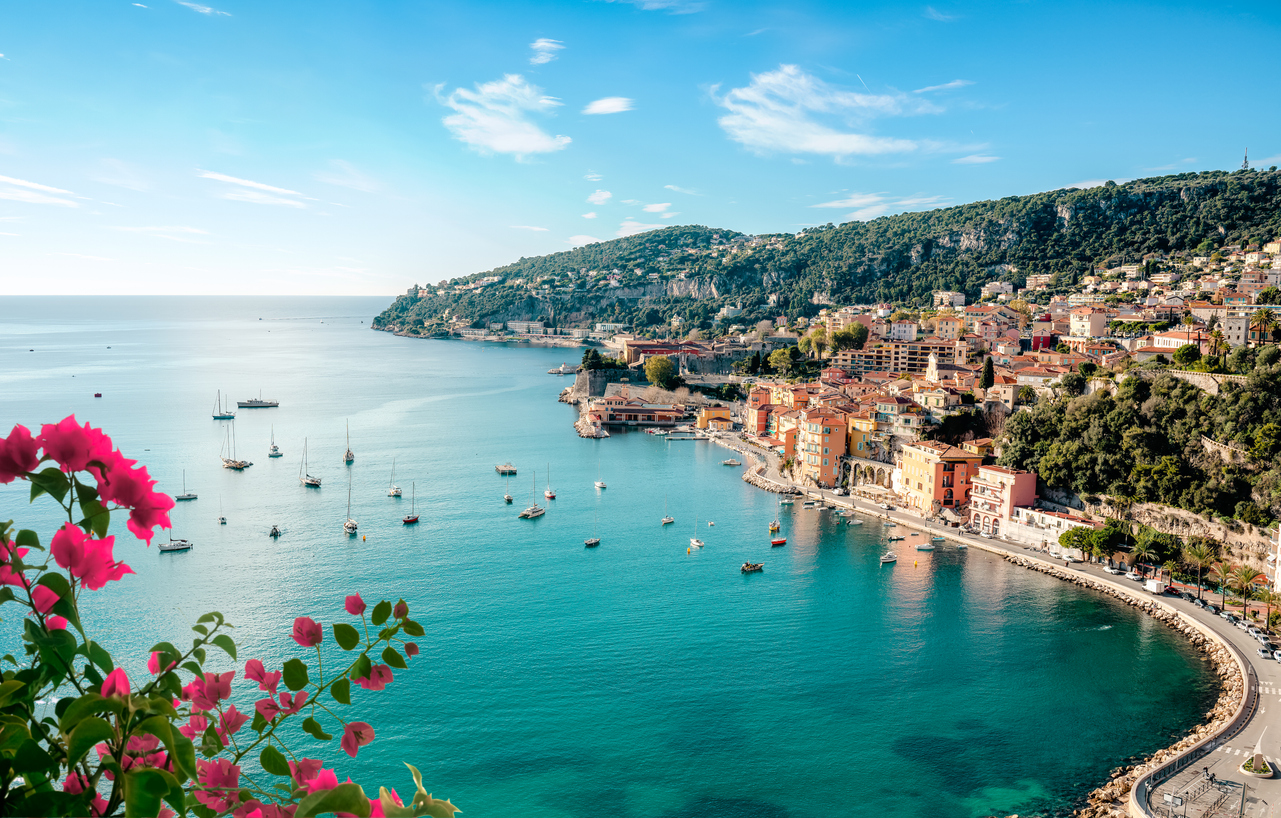
Nice: The Riviera's vibrant capital. The old town (Vieux Nice) is a maze of Baroque architecture, morning markets and excellent restaurants. The Promenade des Anglais is one of Europe's great seaside walks.
Cannes: Famous for its film festival and its glamour. The Croisette boulevard is magnificent; day trips to the Iles de Lerins (boat from the old port) are peaceful and beautiful.
Monaco: The world's second-smallest country packs an extraordinary amount into its one square kilometre: the Casino de Monte Carlo, the Grand Prix circuit, the Oceanographic Museum (founded by Jacques Cousteau) and an almost surreal concentration of supercars and superyachts.
Eze: A medieval hilltop village between Nice and Monaco with breathtaking Riviera views. The perfume town of Grasse is a short drive inland.
Provence
Aix-en-Provence: One of France's most beautiful provincial cities. Wide boulevards, elegant fountains, excellent markets and a refined café culture. Cezanne's studio is preserved here.
The Luberon: The hilltop villages of Gordes, Les Baux-de-Provence, Bonnieux and Lacoste are among the most beautiful in France. Hire a car and spend several days exploring.
Lavender Fields: The lavender plateau of the Valensole Plain (best in late June to mid-July) is one of the most spectacular natural landscapes in Europe. An unmissable detour.
Avignon: Home to the extraordinary Palais des Papes (Palace of the Popes) and one of France's best-preserved medieval city centres.
Bordeaux & the Wine Regions
Bordeaux City: A beautifully restored 18th-century city on the Garonne River. La Cite du Vin (the world's greatest wine museum) is outstanding. The city's restaurant scene is excellent.
Saint-Emilion: A UNESCO-listed medieval wine village surrounded by premier cru vineyards. One of France's most atmospheric destinations. Chateau visits and wine tasting are the main draw.
Burgundy: The Cote d'Or wine road between Dijon and Beaune passes through some of the most hallowed vineyards on earth. Beaune itself is a beautifully preserved medieval town with outstanding restaurants.
Champagne: The cellars (caves) of the great Champagne houses in Reims and Epernay, Moet & Chandon, Veuve Clicquot, Taittinger are fascinating and include generous tastings.
The Loire Valley
The Loire Valley's extraordinary concentration of Renaissance chateaux, Chambord, Chenonceau, Villandry, Amboise, constitute one of UNESCO's most spectacular World Heritage Sites. Best explored by bicycle or rental car over three to four days.
The Alps: Chamonix & Beyond
Chamonix-Mont Blanc: One of the world's great alpine destinations. In winter, world-class skiing. In summer, the Aiguille du Midi cable car and a network of exceptional hiking trails. The view of Mont Blanc from the Mer de Glace glacier is extraordinary in any season.
Val d'Isere / Courchevel / Megeve: Among Europe's finest ski resorts, with infrastructure and hospitality to rival Whistler and St Moritz.
The Dordogne
One of France's most beautiful and under visited regions, medieval villages perched above river valleys, prehistoric cave paintings at Lascaux and Font-de-Gaume, outstanding foie gras and black truffle, and a pace of life that feels like France at its most authentically itself.
Where to Stay
Paris
Le Meurice / Ritz Paris / Hotel de Crillon: Paris's great palace hotels. See our dedicated Paris guide for full accommodation recommendations.
French Riviera
Hotel du Cap-Eden-Roc (Cap d'Antibes): The Riviera's legendary grand hotel, perched on a rocky headland between Cannes and Nice. One of Europe's great hotel experiences.
Hotel Negresco (Nice): An extraordinary Belle Epoque palace on the Promenade des Anglais. Eccentric, magnificent and entirely one of a kind.
Monte-Carlo Bay Hotel & Resort (Monaco): Sophisticated beachside luxury in the principality.
Provence
Villa La Coste (near Aix-en-Provence): A stunning contemporary hotel set among Provencal vineyards, with an outstanding art collection, Michelin-starred restaurant and excellent spa.
Crillon le Brave (Luberon): A beautifully restored Provencal village-hotel with exceptional views across the Luberon valley. One of the great French country house experiences.
Loire Valley & Wine Country
Chateau de la Treyne (Dordogne): A 14th-century chateau hotel on a cliff above the Dordogne River. Romantic, exceptional and truly unforgettable.
Les Sources de Caudalie (Bordeaux): A celebrated spa hotel in the vineyards of Chateau Smith Haut Lafitte. Vinotherapy spa treatments, outstanding wine list and immaculate rooms.
Daily budget in France
France spans an extraordinary range of budgets, from campsites in Provence to €1,000-a-night palace suites on the Riviera. The good news: excellent food and accommodation are available at almost every price point, and France's public transport makes it very accessible without a large transport budget.
A Budget traveller can expect to spend approximately $175-300pp per day. At the higher end $1200 is not out of the question.
TIP: The set-price lunch menu (menu du jour) at French restaurants, typically two or three courses with wine, is almost always extraordinary value and often features the same kitchen producing the same quality as the dinner menu at half the price.
The first Sunday of each month, national museum entry is free across France.
Past Giveaways
FAQs

Make your
next Holiday aReality
Turn daydreams into departures. Become a member today and make your next getaway a reality.
Never miss an offer or update
Subscribe and be the first to receive our news and exclusive offers.
Download Our
Mobile App
Download the EHG App to manage your account and use the interactive map to
easily find local deals and discounts near you.

