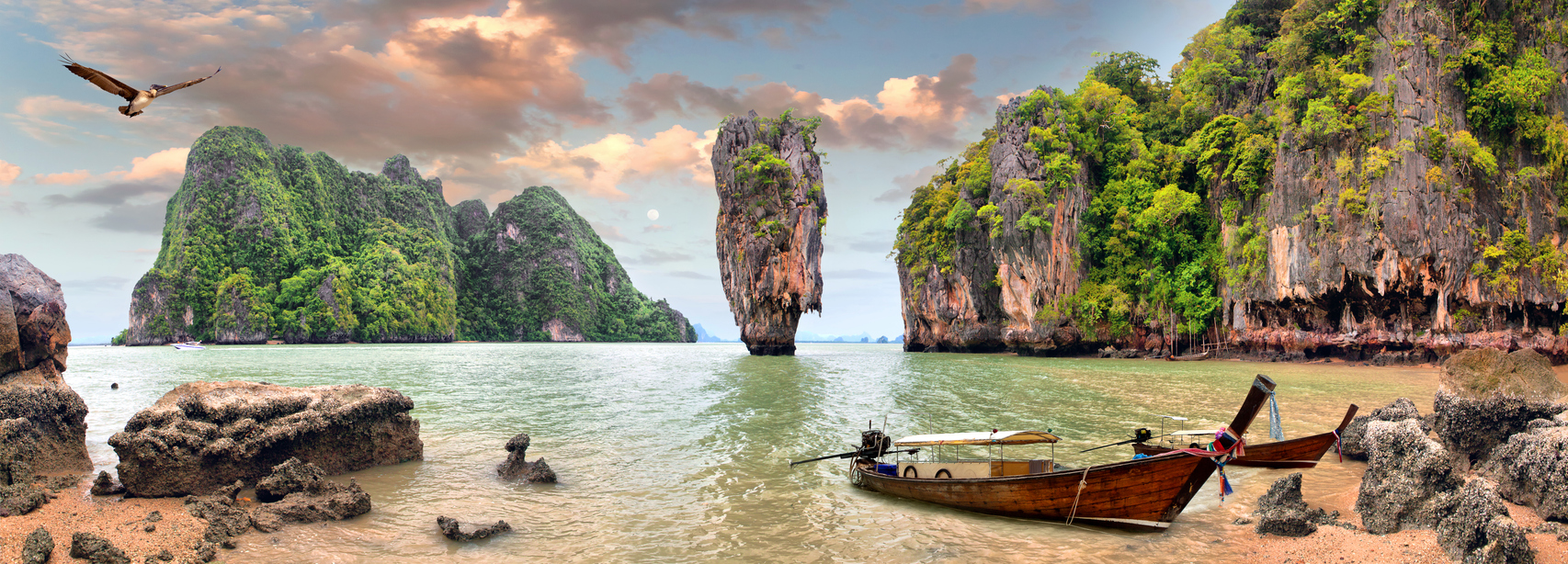
Discover
Thailand
The Land of Smiles, where ancient temples, extraordinary food, world-class beaches and some of the best-value luxury on earth combine to create one of Asia's most rewarding travel experiences.
Thailand has been captivating travellers for decades and it shows absolutely no signs of losing its appeal.
It's a country that seems to have been designed specifically to delight: the food is extraordinary, the beaches are among the most beautiful in the world, the temples are awe-inspiring, the people are genuinely warm, and the value for money is almost unrivalled anywhere on earth.
A five-star resort in Koh Samui that would cost AUD $1,500 a night in Sydney might be AUD $400 here. A massage that would cost $200 at home is $20. A meal that would be $80 is $12.
But Thailand is far more than a budget destination with nice beaches. Bangkok is one of the world's great cities, chaotic, brilliant, inexhaustible, with a food scene that legitimately competes with Tokyo and Paris for sheer quality and variety.
Chiang Mai in the north is a beautifully preserved ancient city ringed by mountains, with a craft culture, cooking scene and sense of calm that's genuinely restorative. The islands of the south, Koh Samui, Koh Tao, Koh Lanta, the Phi Phi Islands offer everything from party beaches to secluded bays where the water is so clear it barely seems real.
Thailand is also a country with deep spiritual roots. Buddhism is woven into daily life in ways both visible and subtle. Monks in saffron robes collect alms at dawn. Golden temples rise from every city and village. The smell of incense drifts through markets and laneways. This spiritual texture gives Thailand a depth and atmosphere that elevates it well beyond its role as a sun-and-beach holiday destination.
For EHG members, Thailand represents the ideal combination of luxury, culture, adventure and extraordinary value, a country where every budget level delivers a genuinely outstanding experience.
How to Get There from Australia
Flights
Thailand is extremely well-served from Australia. Bangkok's Suvarnabhumi Airport (BKK) has direct flights from Sydney, Melbourne and Brisbane with Qantas, Thai Airways and several Asian carriers, with flight time of approximately 9 hours from the east coast. Perth is even better positioned, with Thai Airways operating direct flights to Bangkok in around 7 hours.
Phuket International Airport (HKT) has direct charter and scheduled flights from several Australian cities, and is the most convenient entry point for southern island holidays. Chiang Mai (CNX) is typically reached via a short domestic connection through Bangkok.
Getting Around Thailand
Domestic Flights: Thailand's domestic flight network is excellent and very affordable. Bangkok to Chiang Mai, Bangkok to Phuket, and Bangkok to Koh Samui are all under 90 minutes and can cost as little as AUD $30–$60 one-way when booked in advance on Thai AirAsia, Nok Air or Bangkok Airways.
Overnight Sleeper Trains: The State Railway of Thailand operates comfortable overnight sleeper trains between Bangkok and Chiang Mai (13 hours), a memorable and very affordable way to travel.
Tuk-Tuks and Grab: In Bangkok and Chiang Mai, Grab (Southeast Asia's Uber equivalent) is the easiest and most reliable way to get around. Tuk-tuks are fun for short distances and quintessentially Thai.
Longtail Boats and Ferries: Essential for island-hopping in the south. Ferries connect the mainland to Koh Samui, Koh Tao and other islands; longtail boats serve smaller bays and inland waterways.
Rental Car and Scooter: Available widely, though Bangkok traffic makes driving in the capital inadvisable. In Chiang Mai and on the islands, a scooter is a practical and enjoyable way to explore. International driving permit required.
Best Time to Visit
Cool Season: November to February
Thailand's best travel season. Temperatures are pleasant (25–32°C), humidity is lower, and rainfall is minimal across most of the country. December and January are peak months, book well in advance for this period, particularly for popular islands and Bangkok hotels. This is the ideal time to visit Bangkok, Chiang Mai and northern Thailand.
Hot Season: March to May
Thailand gets hot, very hot particularly in April (Songkran, the Thai New Year water festival, falls in mid-April and is one of the country's most spectacular and entertaining cultural events). Temperatures can reach 40°C in Bangkok and the north. The islands remain pleasant, with the Gulf of Thailand coast (Koh Samui, Koh Tao) generally more comfortable than the Andaman coast in this period.
Wet Season: June to October
Monsoon season brings heavy rainfall, particularly on the Andaman coast (Phuket, Krabi, Phi Phi) which receives the bulk of the southwest monsoon from May to October. The Gulf of Thailand coast (Koh Samui, Koh Phangan) has its own wet season from October to December. The north of Thailand receives rain from July to September. Wet season brings lush green landscapes, dramatically lower accommodation rates and far fewer tourists. Some smaller islands and resorts close entirely from June to September.
Regional Variation
Thailand's two coastlines have opposite wet seasons, which means there's almost always a beautiful island somewhere. When the Andaman coast is wet (May–October), the Gulf coast is dry, and vice versa. Research your specific destination's weather pattern before booking.
Things to Do
Bangkok
Bangkok is one of Asia's greatest cities, simultaneously overwhelming and addictive, with a depth that rewards every visit. It demands at least three to four days and repays a week easily.
Grand Palace & Wat Phra Kaew: The dazzling complex housing the Emerald Buddha. One of Southeast Asia's most spectacular sights. Arrive early and dress modestly (knees and shoulders covered, sarongs available to hire at the entrance).
Wat Pho: Home to the extraordinary 46-metre reclining Buddha, and one of Thailand's oldest and most important temples. The traditional massage school here is also the most respected in the country.
Chatuchak Weekend Market: One of the world's largest markets. 15,000 stalls selling everything from vintage clothing to live animals to artisan ceramics. An overwhelming, extraordinary experience. Go early.
The Chao Phraya River: Take a public express boat along Bangkok's main river for one of the best views of the city. The riverside neighbourhoods of Thonburi on the opposite bank are well worth exploring by longtail boat.
Street Food: Bangkok's street food is among the best in the world. Pad thai, boat noodles, mango sticky rice, grilled pork skewers, green papaya salad, eat as much as possible from as many different stalls as possible. Yaowarat (Chinatown) is the city's best street food precinct, particularly after dark.
Rooftop Bars: Bangkok has some of the world's great rooftop bars. Vertigo at the Banyan Tree, Sky Bar at Lebua (immortalised in The Hangover Part II) and Octave at the Marriott are all spectacular.
Lumphini Park: A beautiful green oasis in the centre of the city. Morning tai chi and joggers by the lake; monitor lizards (!) by the water's edge throughout the day.
Chiang Mai
Northern Thailand's cultural capital is one of Southeast Asia's most appealing cities: a relaxed pace, a beautifully preserved old city moat, outstanding food, world-class cooking classes and a setting ringed by forested mountains.
Old City Temples: Chiang Mai has over 300 temples within the old city walls. Wat Chedi Luang, Wat Phra Singh and Wat Chiang Man are the most significant and beautiful.
Doi Inthanon National Park: Thailand's highest peak, surrounded by spectacular highland scenery, hill tribe villages and extraordinary birdlife. A full-day trip from Chiang Mai.
Thai Cooking Classes: Chiang Mai is the best place in Thailand to learn Thai cooking. A full-day class (typically including a market visit and five to six dishes) is one of the most rewarding travel experiences in the country.
Night Bazaar and Sunday Walking Street: Chiang Mai's night markets are excellent for silk scarves, lacquerware, hill tribe crafts and street food. The Sunday Walking Street on Wualai Road is particularly atmospheric.
Elephant Sanctuary: Several ethical elephant sanctuaries operate outside Chiang Mai, offering day visits where you can observe, feed and walk alongside rescued elephants without riding. Research operators carefully to ensure ethical practices.
The Islands, South Thailand
Phuket: Thailand's largest island and its most developed. Patong Beach for nightlife and energy; Surin and Kamala for a more upscale, quieter experience. Phuket Town's Sino-Portuguese architecture and excellent restaurant scene are underrated.
Krabi & Railay Beach: Krabi Province's dramatic limestone karst scenery is extraordinary. Railay Beach (accessible only by boat (roads can't reach it) is one of Thailand's most beautiful and is world-famous for rock climbing.
Koh Phi Phi: Two islands of near-legendary beauty. Phi Phi Don has accommodation and restaurants; Phi Phi Leh (the location of The Beach) has no accommodation but extraordinary scenery. Day trips from both Phuket and Krabi.
Koh Samui: Thailand's third-largest island with the best infrastructure of the Gulf coast islands. Chaweng Beach for activity and nightlife; Maenam and Bophut for a quieter, more local experience. Outstanding luxury resort options.
Koh Tao: Thailand's top diving and snorkelling island. Some of the best value dive courses in the world, crystal-clear water and a relaxed, friendly atmosphere.
Koh Lanta: A quieter, more laid-back alternative to Koh Phi Phi. Long stretches of beach, excellent snorkelling at nearby reefs and a gentle pace that's ideal for families and those seeking a genuine escape.
Where to Stay
Bangkok
Mandarin Oriental Bangkok: One of the world's legendary hotels, operating since 1876 on the banks of the Chao Phraya River. The Author's Wing (where Somerset Maugham and Joseph Conrad once stayed) is extraordinary.
The Peninsula Bangkok: Arguably Bangkok's finest contemporary luxury hotel. Spectacular river views, outstanding pool, impeccable service and an exceptional spa.
The Standard Bangkok: A stylish lifestyle hotel in the Mahanakhon Tower, home to the highest rooftop bar in Bangkok. Outstanding design and an exceptional location.
Chiang Mai
Anantara Chiang Mai Resort: An elegant riverside retreat in the city's most beautiful quarter, overlooking the Ping River and the old British Consulate gardens.
Dhara Dhevi Chiang Mai: A spectacular resort designed as a Lanna Kingdom village, with rice paddies, teak pavilions and extraordinary landscaping across 60 acres. One of Thailand's most extraordinary hotel experiences.
Islands
Four Seasons Resort Koh Samui: Private pool villas perched on a hillside above the Gulf of Thailand. One of Thailand's finest resort experiences.
SALA Phuket Mai Khao Beach Resort: A chic, secluded all-pool-villa resort on a quiet stretch of Phuket's north coast. Outstanding value for its category.
Rayavadee (Krabi): Set within a tropical garden at the foot of limestone karsts beside Railay Beach, one of Thailand's most spectacular and unique hotel settings.
Six Senses Yao Noi: A remote luxury resort on a private island in Phang Nga Bay with extraordinary views of the limestone karst scenery and outstanding sustainability credentials.
Budget Guide
Thailand is one of the most affordable holiday destinations in the world.
For budget conscious travellers estimate to spend between $45-90pp per day. At the Luxury end of the scale you can expect to spend upwards of $650pp per day.
Note: Thailand is one of the few destinations where even a mid-range daily budget delivers what would be considered luxury in most other countries. A private pool villa, daily massages and excellent restaurant dining can be achieved for under AUD $300 per person per day.
Past Giveaways
FAQ's

Make your
next Holiday aReality
Turn daydreams into departures. Become a member today and make your next getaway a reality.
Never miss an offer or update
Subscribe and be the first to receive our news and exclusive offers.
Download Our
Mobile App
Download the EHG App to manage your account and use the interactive map to
easily find local deals and discounts near you.

