Discover
Greece
Thousands of islands scattered across the Aegean and Ionian seas, a mainland layered with three thousand years of history, and a culture of long lunches, warm hospitality and unhurried evenings.
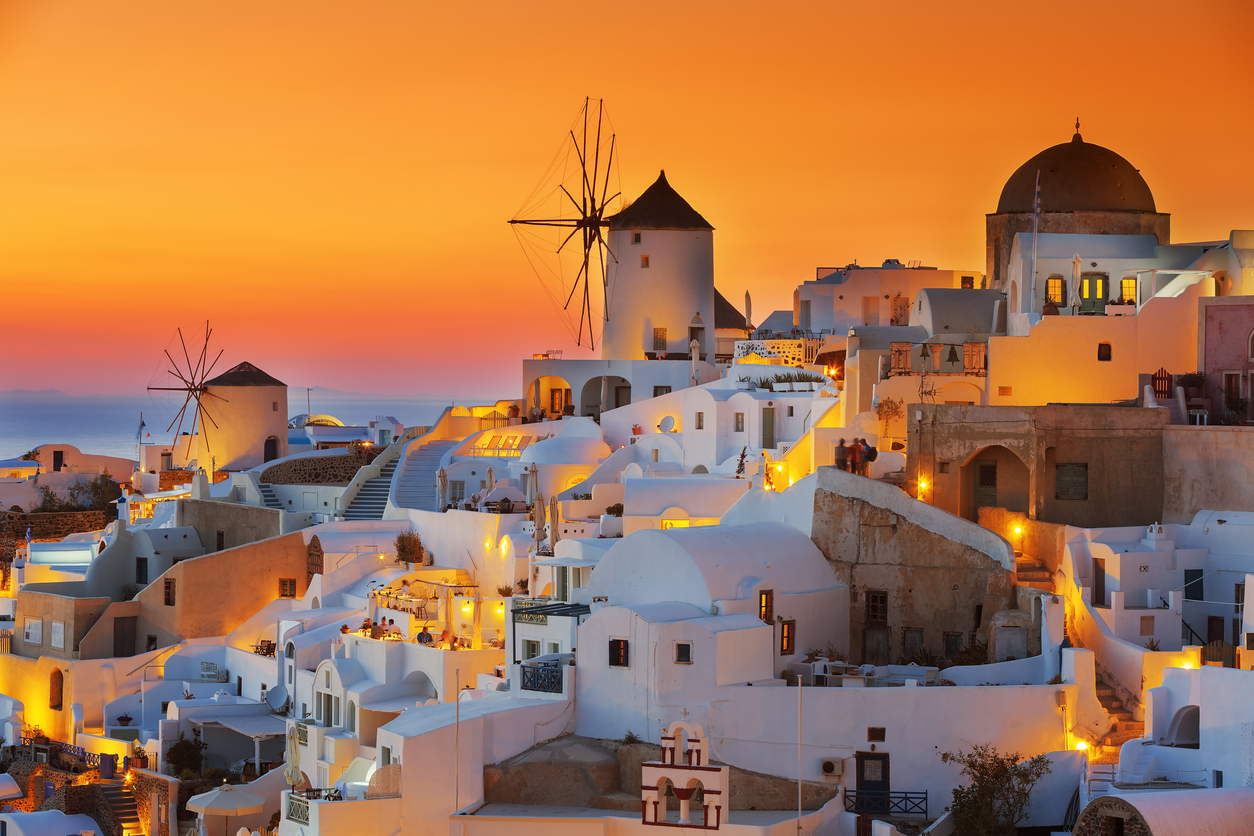
Greece rewards travellers who mix it up: whitewashed island villages tumbling down to impossibly blue water, Athens' ancient ruins sitting a short walk from some of Europe's best modern dining, and a ferry network that turns island-hopping into part of the holiday itself.
Santorini's caldera sunsets and Mykonos' beach clubs get the headlines, but Crete's mountain villages, Naxos' quiet beaches and the Peloponnese's olive groves and Byzantine towns reward those who venture further.
For Australians, Greece delivers a rare combination: genuinely ancient history, some of the best food and wine in the Mediterranean, and a pace of life built entirely around enjoying the moment. For EHG members, it's one of the great multi-stop destinations, a few days in Athens, a week hopping the islands, and a culture that makes slowing down feel like the whole point.
How to get to Greece from Australia
Flights
There are no direct flights from Australia to Greece, so every route runs through a major hub. Emirates via Dubai is the most common choice for Australian travellers, with one flight a day and a total journey time of around 22-24 hours including the layover. Qatar Airways via Doha and Singapore Airlines via Singapore (connecting onward with partner carriers) are the other standard options, and all three offer competitive premium-cabin fares into Athens (ATH).
From Sydney or Melbourne, budget roughly a full day of travel door to door. From Perth, routing via Asia or the Gulf trims the connection time slightly compared to the east coast.
Getting Around Greece
Ferries: The backbone of any island-hopping itinerary. High-speed ferries connect Athens' port of Piraeus to the Cyclades (Santorini, Mykonos, Naxos, Paros) in 2-5 hours, with slower conventional ferries also available at lower cost. Book popular routes in summer well in advance.
Domestic Flights: Aegean Airlines and Olympic Air connect Athens to the larger islands (Santorini, Mykonos, Crete, Rhodes) in 40-50 minutes, useful for travellers short on time or combining several islands in one trip.
Rental Car: Essential for exploring Crete, the Peloponnese and rural mainland Greece at your own pace. Roads are generally good; driving in central Athens is best avoided.
Athens Metro: Clean, fast and connects the airport directly to the city centre and the main archaeological sites in around 40 minutes.
Best time to visit
Shoulder season: May, June and September
The sweet spot for most travellers. Warm, sunny days without peak-season heat or crowds, all islands and restaurants open, and accommodation prices well below August's peak. Widely considered the best all-round time to visit.
Summer: Late June to August
Peak season, and peak everything else too. Temperatures sit in the high 20s to low 30s with little to no rain, island life is at its liveliest, but prices, crowds and heat all peak alongside it, particularly from mid-July through August.
Autumn: October
Still warm enough for beach days on islands like Crete, which holds its weather longer than most, with thinner crowds and easing prices. A strong alternative to the May/June shoulder.
Winter: November to April
Many islands quieten significantly, with some tavernas and hotels closing for the season. Athens, Crete and the mainland stay fully open year-round and make for a quieter, more local experience.
Things to do
Athens
The Acropolis and Parthenon: Non-negotiable, and best visited at opening time to beat both the crowds and the heat.
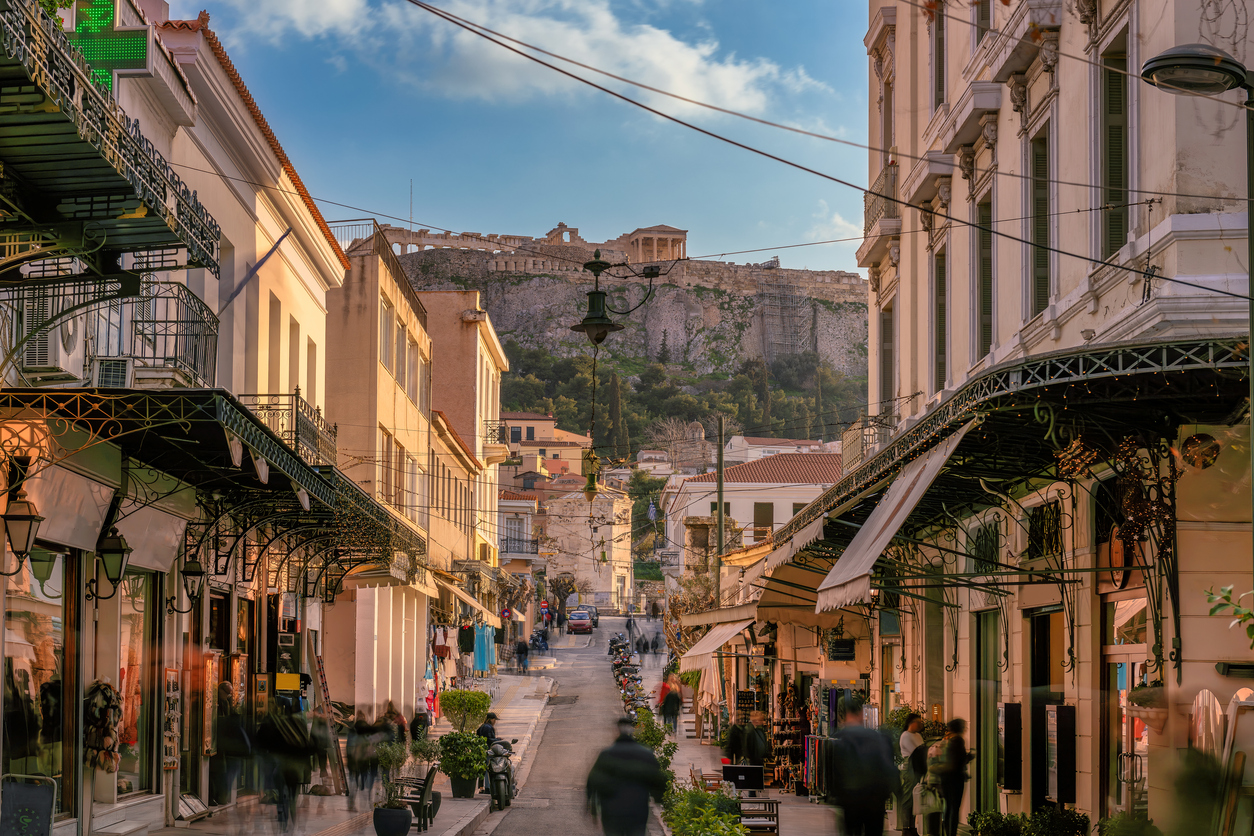
Plaka and Monastiraki: Athens' old town, all cobblestone lanes, tavernas and rooftop bars with Acropolis views.
The Acropolis Museum: One of the finest modern museums in Europe, purpose-built to house the Parthenon marbles.
Day trip to Cape Sounion: The Temple of Poseidon at sunset, an hour from the city, is one of Greece's most underrated views.
The Cyclades
Santorini: The caldera views from Oia and Fira are the image most people have of Greece, best experienced at sunset with a glass of local Assyrtiko wine. Stay a night or two in Imerovigli for the same views with fewer crowds.
Mykonos: Windmills, Little Venice and some of the Mediterranean's best beach clubs, alongside a genuinely charming old town once the day-trippers clear out.
Naxos: The largest and most overlooked Cycladic island, with mountain villages, ancient ruins and beaches that rival Mykonos without the crowds.
Paros: A quieter, increasingly fashionable alternative with excellent beaches and the pretty fishing village of Naoussa.
Crete
Chania's Old Town: A beautifully preserved Venetian harbour town, widely considered one of Greece's prettiest.
The Samaria Gorge: One of Europe's longest gorges, a full-day hike through dramatic White Mountains scenery.
Elafonissi Beach: Pink-tinged sand and shallow turquoise water on Crete's remote southwest coast.
The Peloponnese & Mainland
Meteora: Monasteries perched atop sheer rock pillars, one of the most extraordinary sights in Greece and a UNESCO World Heritage Site.
Nafplio: A beautifully preserved Venetian-era town and one of the Peloponnese's most charming bases.
Delphi: The ancient sanctuary of the Oracle, dramatically set on the slopes of Mount Parnassus.
Where to stay
Santorini
Canaves Ena: An 18-suite boutique hotel built into historic wine caves, recently renovated, with architecture that nods to the island's heritage.
Grace Hotel Santorini: Suites and villas with private plunge pools in Imerovigli, among the best caldera views on the island.
Mykonos
Four Seasons Hotel Mykonos: The island's newest benchmark for luxury service.
Kalesma Mykonos: An ultra-luxury hideaway above Ornos Bay with Cycladic charm and genuine privacy.
Athens
Hotel Grande Bretagne: A neoclassical landmark overlooking Syntagma Square, Athens' most storied address.
THE DOLLI: A historic-centre hotel with Acropolis views from its rooftop pool and restaurant.
Four Seasons Astir Palace: Beachfront glamour on the Athens Riviera in Glyfada.
What can I expect to spend in Greece
Excluding flights and accommodation, budget around $100-150 per person per day for a mid-range trip covering food, ferries, sights and incidentals. A backpacker can hold daily costs near $100-125; a luxury traveller in high-end hotels and restaurants should budget $250 or more per day.
For a full two-week holiday from Australia including flights, expect roughly $4,000pp on a shoestring, $5,500-$7,000pp mid-range, and $9,000pp or more for a comfortable, well-appointed trip.
Return economy flights from Sydney or Melbourne typically run $1,800-$2,300 in the November-March low season, $2,300-$2,900 in the May/June and September shoulders, and $3,000-$3,800 across July and August.
Tips: Book inter-island ferries in advance for July and August travel, when popular routes sell out. Taverna lunches are noticeably cheaper than dinner menus at the same restaurant. A rental car is often cheaper than taxis for exploring Crete or the Peloponnese over several days.
Past Giveaways
Greece FAQs
No visa is required for stays of up to 90 days within any 180-day period, as Greece is part of the Schengen Area. A passport valid for at least three months beyond your departure date is required.
Santorini and Mykonos deliver the classic postcard Greece and are the easiest to reach by direct ferry or flight from Athens. For a quieter introduction with fewer crowds, Naxos or Paros offer a similarly beautiful but more relaxed experience.
Two to three islands over 10-14 days is a comfortable pace that allows for ferry transfers without feeling rushed. Trying to fit in more usually means spending more time travelling than exploring.
Greece sits in the middle of the Mediterranean pricing spectrum, generally cheaper than Italy or the French Riviera but pricier than Turkey or the Balkans. Santorini and Mykonos carry a premium over Athens and the lesser-known islands.
Exceptional and central to the experience, fresh seafood, olive oil, tomatoes and cheese at their best, slow-cooked lamb, and a wine scene (particularly Assyrtiko from Santorini) that's increasingly recognised internationally.
Yes, particularly Crete and Corfu, which offer calmer beaches, family-friendly resorts and shorter transfer times than the more remote Cyclades islands.
The Euro (EUR). Credit cards are widely accepted in cities and larger towns; smaller tavernas and island shops often prefer cash.

Make your
next Holiday aReality
Turn daydreams into departures. Become a member today and make your next getaway a reality.
Never miss an offer or update
Subscribe and be the first to receive our news and exclusive offers.
Download Our
Mobile App
Download the EHG App to manage your account and use the interactive map to
easily find local deals and discounts near you.

